

Career
· Entrepreneur
· Life
Welcome to the immersive revolution! We’re not just making art anymore. We’re living it.
June 3, 2025
You may have noticed… something is bubbling under the surface in the world of live performance and events. There’s fizz, there’s edge, and there’s this irresistible urge to reach out and touch the moment — rather than sitting back, arms crossed in the dark.
That “something”? It’s called immersive design — and it’s radically changing how we create, connect, and move people.
Gone are the days of watching from afar. Today, we want to live the story, not just watch it happen. A good show or a classic event? Not enough. We want to step into another world, feel the heartbeat of it, and become part of the adventure.
That’s exactly what immersive design offers: an invitation to emotion, action, and good old-fashioned wonder.
Immersive, you say? What even is that?
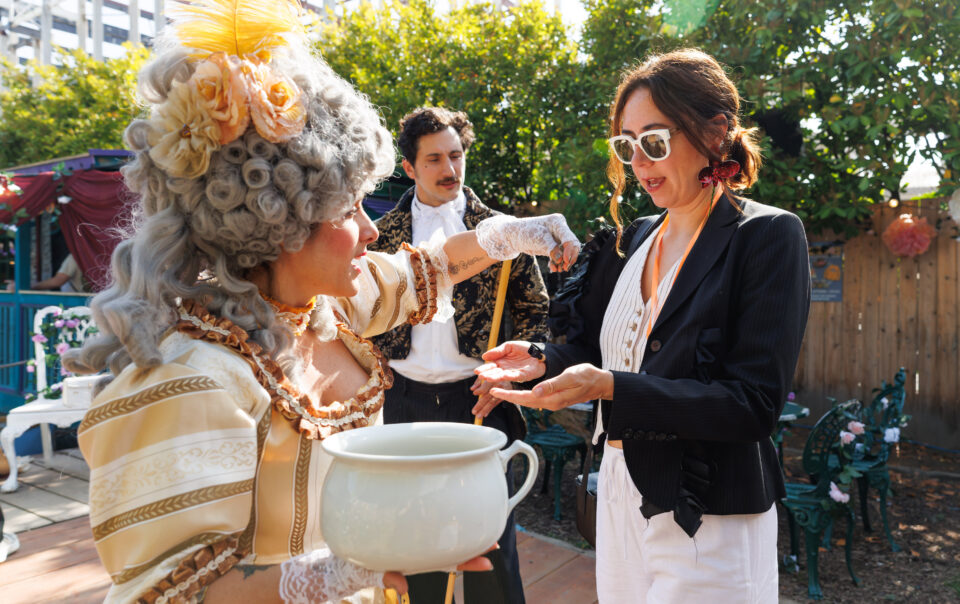
Immersive design (or experiential, depending on who you ask) breaks the rules. It doesn’t just present a show or an event — it builds a time-space where the audience becomes part of the story. Sometimes they’re guests. Sometimes they’re co-creators. Occasionally? They’re the main character.
Is it theatre? Yes — but not only.
Is it scenography? Yes — and also storytelling, emotion, human interaction, and sometimes (but not always!) a touch of tech.
A great immersive setup isn’t just a slick VR gimmick. It’s a world that opens up, a light that tilts you off balance, a scent, a sound, a texture that quietly tells you: You’re not where you thought you were.
Live Performance Will Never Be the Same Again
From promenade theatre and interactive performances to full-blown immersive installations, we’re now building stories to live, not just witness.
The audience is no longer a passive crowd. They explore, choose, react, affect.
It’s a paradigm shift — no more straight lines, stiff scripts, or obedient rows of chairs. Each person carves out their own version of the experience. And that is exactly what makes it unforgettable.
And Events? They’re Catching the Wave (in Style)
Brands and institutions have caught on: getting attention today takes way more than a decent PowerPoint and a tote bag. You’ve got to make people feel, surprise them, move them.
A product launch becomes a quest.
A conference? A secret mission.
A trade fair? An emotional treasure hunt.
When done right, immersive design boosts engagement, builds real connection, and transforms a “nice event” into an unforgettable one.
Emotion. Always Emotion.
That’s the real star of the show.
And here’s the good news: you don’t need a Netflix-sized budget to hit the mark. A perfectly placed light, a committed performer, an enveloping soundscape… that might be all you need to make magic happen.
The human being is the heart of it all. Their capacity to feel is what brings immersion to life.
And if you’re wondering why it’s so powerful — it’s simple: people don’t just want to see anymore.
They want to live, to be transformed, to leave the room different than when they entered.
Are you an artist? A producer? A scenographer? An event designer?
Then maybe — just maybe — it’s time to get trained.
To learn how to write interactive narratives.
To guide an audience without smothering them.
To build worlds that move people, deeply and joyfully.
That’s exactly why we created Immersion 360°:
Strategies and Techniques for Immersive Creation — a 14-hour deep dive into the world of immersive storytelling, from the why to the how. Whether you’re a curious beginner or a seasoned pro craving a creative reboot, you’ll walk away with solid tools — and probably a burning desire to create differently.
In conclusion: we’re not just making art anymore.
We’re living it.
Immersive design isn’t a trend. It’s a bold, joyful, transformative way to tell stories, create connection, and build meaning.
It’s a soft revolution — human, artistic, sensory.
And guess what? It’s already happening.
The only question is:
Are you going to watch the train go by…
or jump on and start laying the tracks?


